
. . . “Our liquor was only a symptom. So we had to get down to causes and conditions.
Therefore, we started upon a personal inventory. This was Step Four. . . Being convinced that self, manifested in various ways, was what had defeated us, we considered its various manifestations.
Resentment is the “number one” offender. It destroys more alcoholics than anything else. From it stem all forms of spiritual disease, for we have been not only mentally and physically ill, we have been spiritually sick. When the spiritual malady is overcome, we straighten out mentally and physically. In dealing with resentments, we set them on paper. We listed the people, institutions, or principles with whom we were angry. We asked ourselves why we were angry . . .
We went back through our lives. Nothing counted but thoroughness and honesty. When we were finished we considered it carefully. The first thing apparent was that this world and its people were often quite wrong. To conclude that others were wrong was as far as most of us ever got. The usual outcome was that people continued to wrong us and we stayed sore . . .
It is plain that a life which includes deep resentment leads only to futility and unhappiness. To the precise extent that we permit these, do we squander the hours that might have been worthwhile. But with the alcoholic, whose hope is the maintenance and growth of a spiritual experience, this business of resentment is infinitely grave. We found that it is fatal. For when harboring such feelings we shut ourselves off from the sunlight of the Spirit. The insanity of alcohol returns and we drink again. And with us, to drink is to die.
If we were to live, we had to be free of anger. The grouch and the brainstorm were not for us. They may be the dubious luxury of normal men, but for alcoholics these things are poison. .
Having laid out the spiritual nature of the problem, the Big Book goes on to describe the spiritual solution to it (pp. 66-67, emphasis ours):
We turned back to the list [of resentments] for it held the key to the future. We were prepared to look at it from an entirely different angle.
We realized that the people who wronged us were perhaps spiritually sick.
Though we did not like their symptoms and the way these disturbed us, they, like ourselves, were sick too. We asked God to help us show them the same tolerance, pity, and patience that we would cheerfully grant a sick friend. When a person offended, we said to ourselves, “This is a sick man. How can I be helpful to him? God save me from being angry. Thy will be done.
We avoid retaliation or argument. We wouldn’t treat sick people that way. If we do, we destroy our chance of being helpful. We cannot be helpful to all people, but at least God will show us how to take a kindly and tolerant view of each and everyone.
Referring to our list again. Putting out of our minds the wrongs others had done, we resolutely looked for our own mistakes. Where had we been selfish, self-seeking, and frightened? Though a situation had not been entirely our fault, we tried to disregard the other person involved entirely. Where were we to blame? The inventory was ours, not the other man’s. When we saw our faults we listed them. We placed them before us in black and white. We admitted our wrongs honestly and were willing to set these matters straight.
“The emphasis on inventory is heavy only because a great many of us have never really acquired the habit of accurate self-appraisal” (Step 10, p. 89).
For related posts, see Emotional Sobriety: Anger, The Discipline of Self-examination, The Virtue of Forgiveness, And When We Were Wrong. For references to the spiritual axiom in PTP4, see pp. 25, 39, 204, and 326.
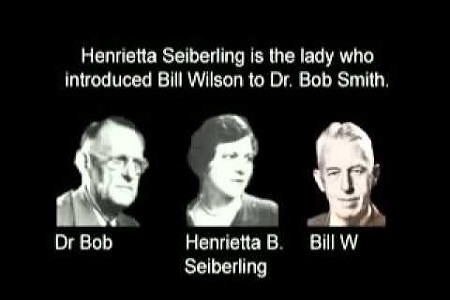
[Posted 07/04/26. Image: Dr. Bob, Henrietta Seiberling, and Bill W.]
To return to Reflections, please click on link.